
Handloom Sarees: The Fashionable Choice That Is Eco-Friendly
The handloom saree is more than just an outfit; it is an expression of the rich Indian culture and craft. A handloom saree woven using hand-operated looms, these represent years of expertise and perfection in the weaving process.
Handloom Sarees Origin
The origin of handloom sarees is quite interesting. It goes back to thousands of years in India. Handloom sarees originated in the ancient civilization era when talented weavers were involved in making fabrics manually with the help of their looms. There are ample references to hand-woven fabrics in ancient scriptures, historical records, and archaeological excavations. Thus, one can conclude that India has always been famous for its weaving practices.
Weaving was a unique cultural aspect of Indian society and sarees were woven as items of high aesthetic value and unique patterned designs. There are several types of handloom sarees in India, some include Banarasi saree, Kanjeevaram saree, Chanderi saree, and Sambalpuri saree.
What Makes Handloom Sarees Special?
These sarees differ from all other textiles since they are crafted with dedication and love.The unique weaving process followed by professional craftsmen creates a unique design and texture for each individual item.
Beauty of Handloom Sarees
With their distinctive features, sarees can be said to represent the rich cultural heritage of the country. Woven using advanced techniques with a lot of dedication, these sarees are quite distinctive and unique in comparison to others.
The sarees come in different materials such as cotton, silk, linen, or blend.
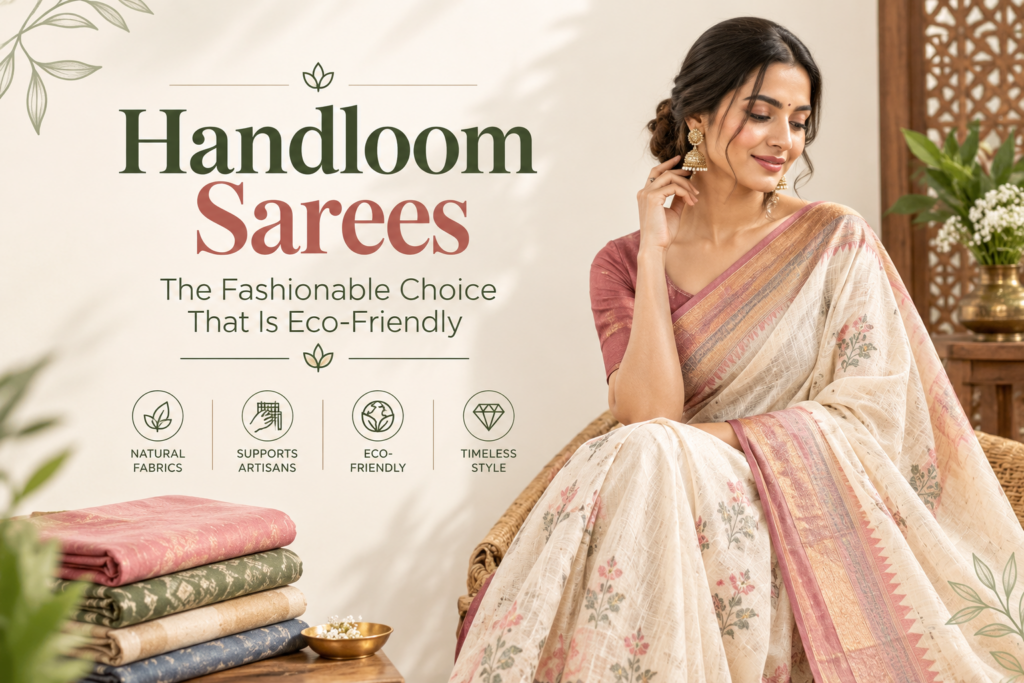
Sustainability of Handloom Sarees
1. Sustainable Manufacturing Process
A handloom saree uses less electrical power than a saree made by a machine. In addition, this manufacturing method does not produce a high amount of carbon emissions and energy usage making it highly sustainable when compared to other.
2. Natural and Biodegradable Fabrics
Handloom sarees are usually made of natural materials such as cotton, silk, and linen. In contrast to synthetic fabrics, natural fabrics give less impact on the environment as they are biodegradable.
3. Minimized Waste
Since handloom sarees are produced in small quantities, the producers are able to meet the market demands easily and minimize waste production in the market.
A Perfect Blend of Traditional and Fashionable Dress
One great benefit of wearing sarees is that they are versatile. Women have many ways of dressing up with handloom sarees by incorporating their styles.
They can match with:
- Designer blouses.
- With Fancy accessories when going for parties.
- Jewelry during religious ceremonies.
- Simple accessories for work place or with any other formal events.
No matter what occasion women are dressing up for, they will never disappoint them.
Comfort with Elegance
Handloom sarees are made from breathable fabric materials that offer a lightweight quality for the ease of wearing them for hours together. Cotton sarees are preferred during hot weather, and silk handloom sarees add elegance to celebratory occasions.
Handloom sarees are inherently durable and hence retain their charm for many years, thus making them worth investing in as wardrobe pieces.
A Fashion Declaration Towards The Sustainability
Today’s consumer is aware of the environmental repercussions of his fashion purchases and the society he wishes to contribute to through those purchases. The handloom saree is a piece of clothing that can reflect a woman’s philosophy regarding her purchases .
They offer timeless appeal unlike fast fashion items that lose their relevance quickly with changing seasons. They serve as heirlooms within families and get preserved for several generations together.
Handloom Sarees on the Fashion Runway
Nothing gives me greater joy than seeing handloom sarees move from being temple-worn, wedding-worn, and family-worn pieces of clothing to becoming haute couture in their own right. Designers like Sabyasachi Mukherjee, Anavila Misra, and Raw Mango have gained global fame based on the exquisite Indian handloom fabrics they have used in their collections.
Styling a handloom saree has now become an art form on its own. A simple white Khadi cotton saree styled in a blazer makes a stunning outfit for your corporate boardroom. Drape yourself in pastel handloom fabric for a casual luncheon or visit to an art gallery. Choose a silk Ikat and pair it with a trendy blouse for formal functions. Handloom sarees are so versatile, so much in tune with you, that they lend themselves perfectly to any occasion.
Moving Towards Handloom Sarees
Switching to handloom is not about giving up on style but about creating your own unique style. Here are a few pointers to get started:
Begin by identifying the handloom weaving practices unique to your own local community. There is nothing quite like wearing a piece of clothing that has been woven right there at home. Source from the weaver herself or through weaver cooperatives, or alternatively from curators and brands that are completely transparent about their sourcing process. Look out for authenticating certificates such as the India Handloom Brand label or Geographic Indication tags.
Treat your handloom sarees with care and love — hand-wash gently, wrap in a soft cotton cover, and avoid exposing them to direct sunlight. Over time, a carefully nurtured saree grows even more gorgeous.
The Larger Context
Ultimately, making the choice to wear a handloom saree is an expression of what kind of society you would like to be part of. It is an assertion of your preference for the slow over the quick, the handcrafted over the disposable, and the environment-friendly over the environmentally destructive.